
Healing the land, empowering communities: How gully reclamation is transforming Mwenezi
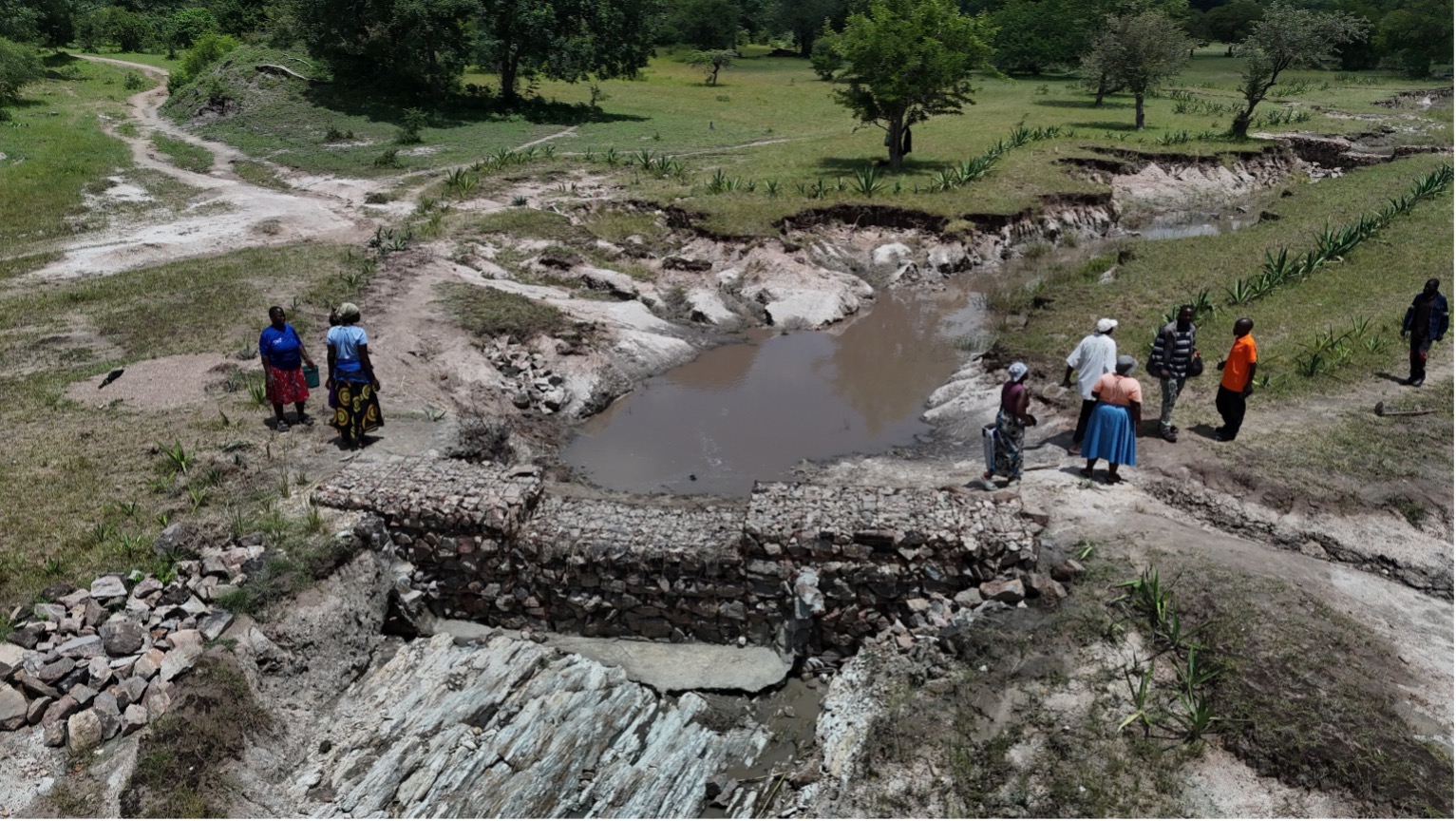
Mwenezi District is characterized by soils that easily break down and wash away, which has resulted in formation of deep gullies (pictured below) and sedimentation of water bodies. The scale of the problem is evident in the loss of critical water infrastructure. At least 23 earth dams constructed to harvest and store seasonal rainfall runoff have already become non-functional due to siltation, while many others remain at risk. These dams play a vital role in supporting rural livelihoods by providing water for livestock, small-scale irrigation, and domestic use, particularly during the long dry periods that characterize the district. The gullies cut through grazing areas, reducing available pasture, which negatively affects livestock production, washing away croplands, and endangering homesteads. The Locally led Indigenous Nature Based Solutions for Climate Change Adaptation in Zimbabwe (LINCZ) Project championed a community-driven gully reclamation initiative across six wards, restoring degraded ecosystems while empowering local communities through inclusive, participatory action.
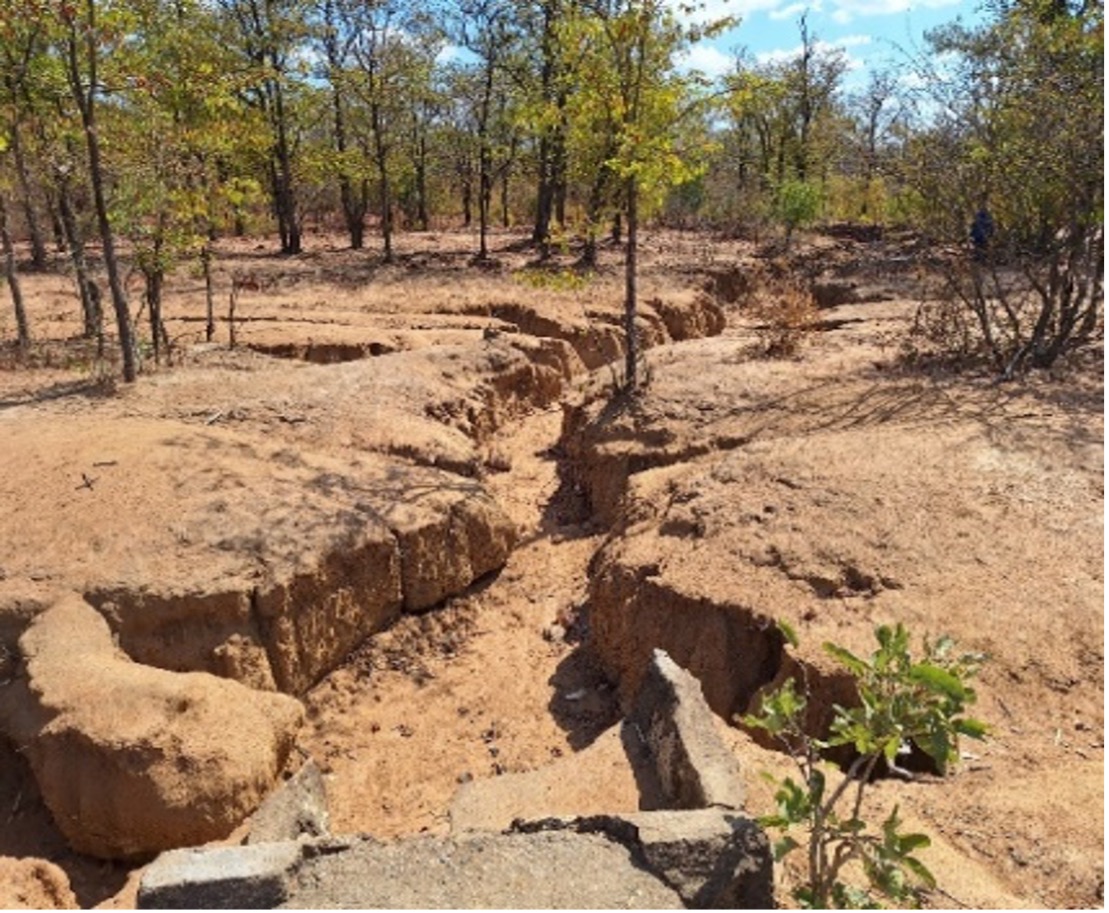
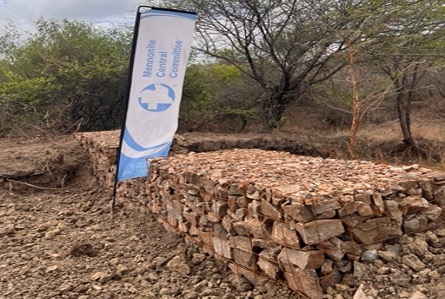
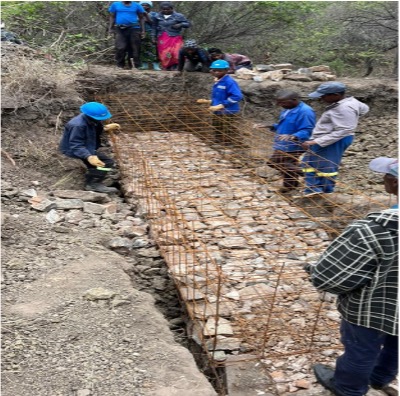
Photos by Score Against Poverty, 2025
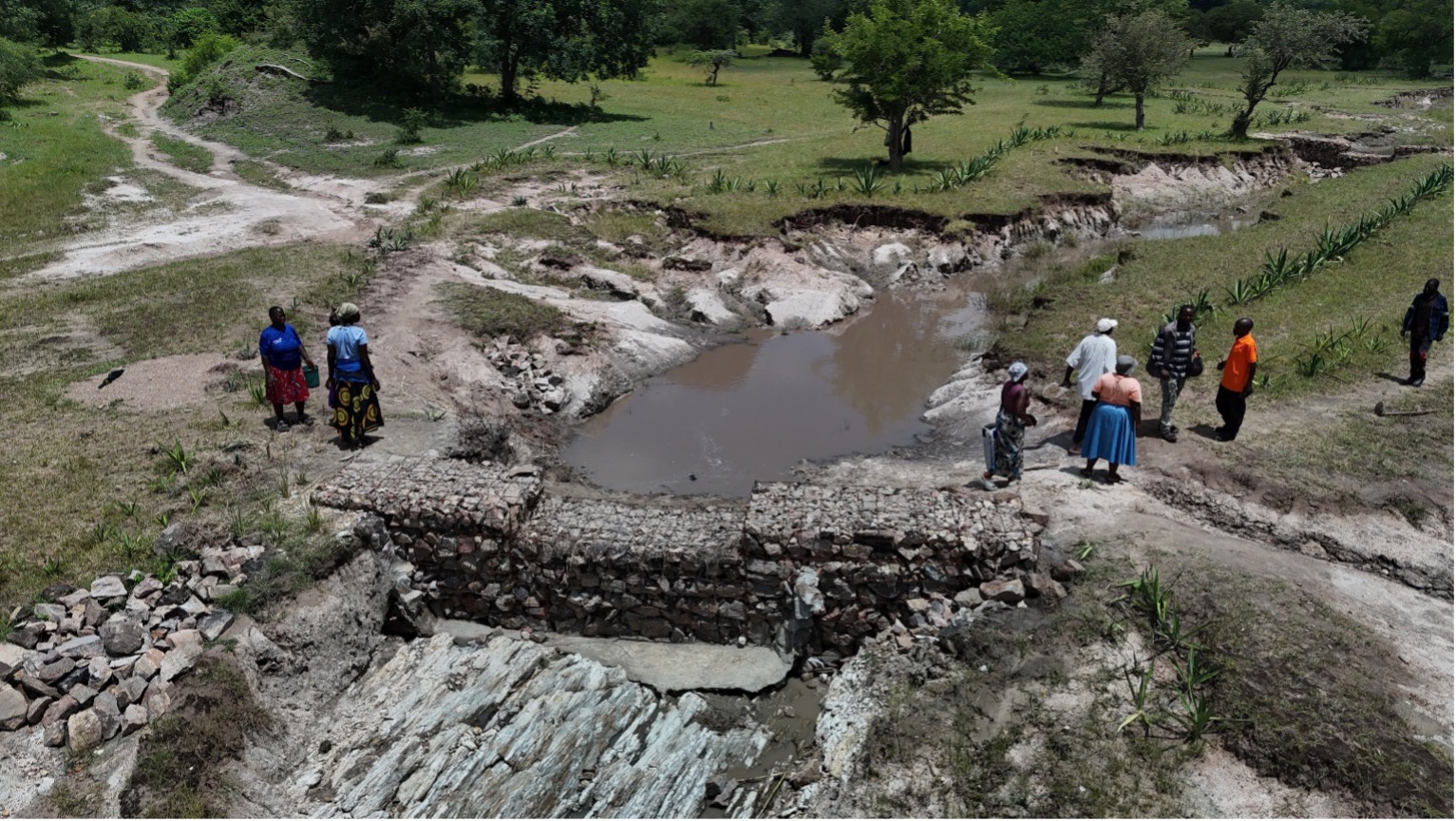
The initiative adopted a cash-for-work model, allowing community members to earn income while rehabilitating their land. 600 participants joined hands to construct gabion trenches to stop erosion (pictured above), contour ridges to manage water and prevent erosion, and storm drains, working to transform eroded landscapes back into productive zones. This approach not only worked to minimize land degradation but also offered tangible financial assistance to households who were facing drought-related income loss.
Most importantly, the initiative adopted a no-discrimination policy, ensuring that all willing community members were given an equal opportunity to participate regardless of status, background or social standing. This inclusive approach strengthened unity and ensured that no one was left behind in the process of land restoration.
To ensure technical excellence and precision, the Rural Infrastructure Development Agency (RIDA), a government agency responsible for rural infrastructure, and the Department of Agricultural Engineering, Mechanization and Farm Infrastructure Development, a government technical department, were engaged as lead technical partners. Their engineers and technicians trained participants on gully reclamation techniques, gabion construction, drainage management and site maintenance.
These partnerships equipped participants with valuable, transferable technical skills for future use in other environmental and construction projects. For many participants, this initiative provided more than wages, it restored dignity, unity, and a sense of ownership over community resources.
"We are repairing the same land that feeds us. Every gabion we build gives us hope for our children."
Gully reclamation participant, Ward 1
Each ward established a gully reclamation committee composed of both men and women to coordinate activities, manage resources, and ensure equitable participation. In total, the LINCZ project had ten gully committees with 78 members. These committees became vital platforms for leadership, transparency, and community dialogue, helping to promote accountability and local decision-making. Women were given space to lead and express their voices in planning and evaluation processes.
Drone footage view of vegetation and gabion structures at Chikadzi gully in Ward 1, Mwenezi. Photo courtesy of MCC Zimbabwe, 2026.
Recognizing that some women involved were nursing mothers, the project introduced child-minding arrangements at gully sites. This allowed mothers of young children to participate fully in the program while ensuring their children were cared for in a safe space. This innovation not only promoted gender inclusion but also strengthened the social fabric of the initiative by recognizing and supporting women's dual roles as caregivers and workers.
"Before the LINCZ project, women, especially those with young children, often found it difficult to participate in community activities and decision-making processes. The child-minding arrangements made it possible for us to contribute our ideas and take part in the gully restoration work. Through the gully committee, our voices are now heard, and we are actively involved in finding solutions that are improving both our environment and our livelihoods."
Mai Mbaimbai, Village Health Worker and committee member of Mavambo gully reclamation committee in Ward 6
Visible impacts
The impact of the gully reclamation initiative in Mwenezi is already visible and inspiring. Communities are beginning to witness the environmental, social, and economic benefits of their collective efforts:
Land restoration: Several gullies were successfully stabilized through the construction of gabion structures and the establishment of vegetative cover, significantly reducing soil erosion and improving water infiltration. The vegetation helps anchor the soil with roots and slows down water flow, allowing more water to soak into the ground rather than running off. In total, nine hectares of degraded land were restored across ten gullies, an area roughly equivalent to about 17 football fields.
During the 2025/2026 rainfall season, the district received its first effective rainfall event of more than 80 mm. Following these rains, there was evidence of silt and soil deposition within the restored gullies. This buildup of sediment is an encouraging sign, as it shows that soil is being slowed down and retained rather than washed away, helping to stabilize the land for gradual regeneration and landscape rehabilitation.
Livelihood recovery: 600 community members participated in the cash-for-work program, receiving financial support for their contributions to gully reclamation activities. The initiative provided short-term income that helped vulnerable households meet basic needs during lean seasons, while also enabling some families to reinvest in farming activities and household livelihoods
"The money I earned through the project came at a time when my family was struggling. I was able to buy food, pay school fees for my children, and purchase seed for the next farming season. What makes me proud is that while earning an income, we are also repairing the land that had been destroyed by erosion. Today, when I see grass and vegetation returning to areas that were once deep gullies, I smile because I know that our work is creating a better future for our children and grandchildren."
Gully reclamation participant, Ward 1
Social cohesion: The rehabilitation activities united community members of different genders and age groups in working towards a shared goal, fostering cooperation and rebuilding trust among neighbors.
By placing communities at the centre of restoration efforts, the LINCZ project is demonstrating that sustainable land rehabilitation is most effective when local people lead the process.
Through inclusive participation, skill development, and community ownership, the gully reclamation initiative restored not only degraded landscapes but also hope, dignity, and resilience among the people of Mwenezi. As communities continue maintaining the restored gullies, including repairing structure and protecting vegetation, the project stands as a powerful example of how locally led nature-based solutions can heal the land while empowering people to build a more resilient future.
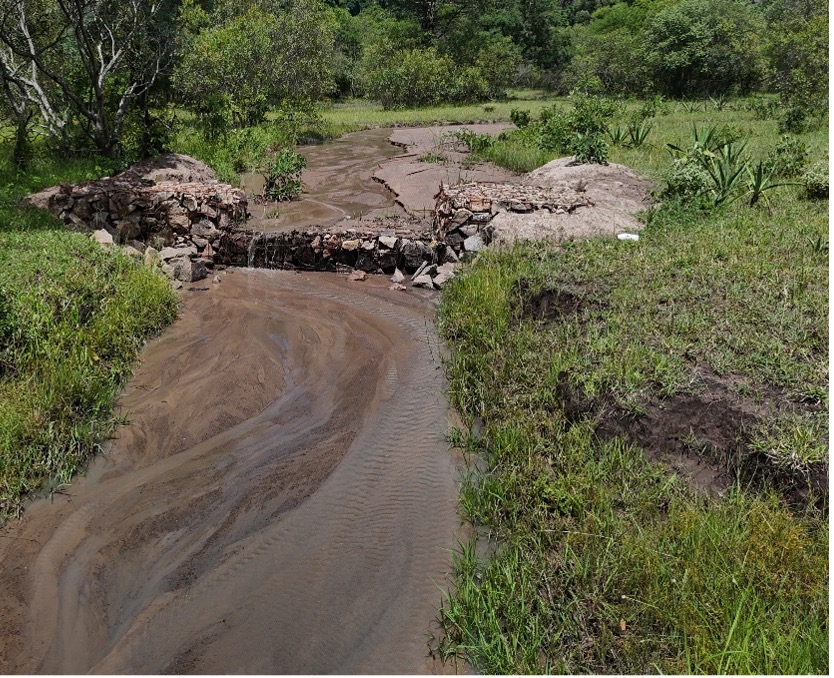
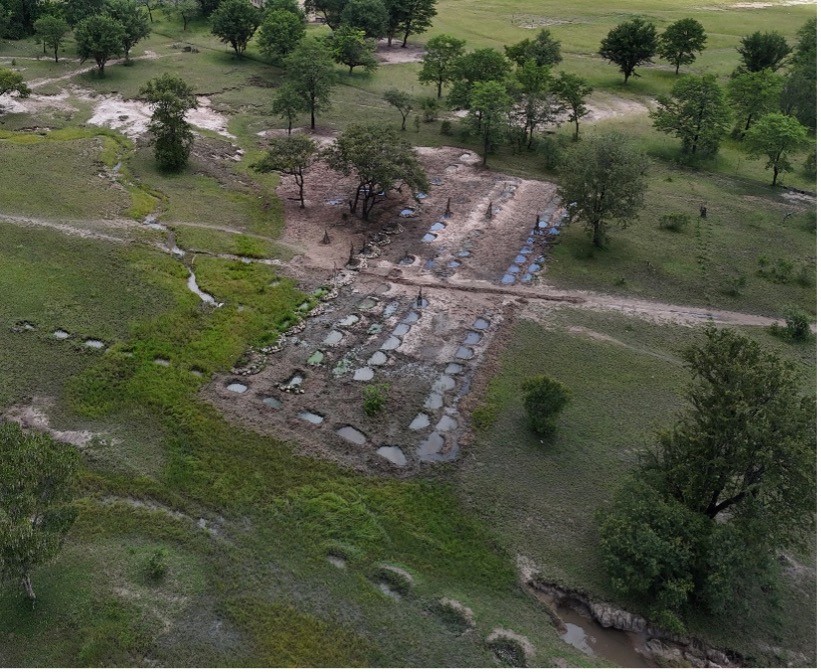
Left / top: Half moons innovation at gully sites. Right / bottom: Proof of sedimentation at chikadzi gully. Photos courtesy of MCC Zimbabwe, 2026.
About Score Against Poverty
Score Against Poverty (SCORE) is a local, community-based organization registered as a charity in 2020. However, it has been operating as a Trust since 2014. With over a decade of experience, SCORE has developed diverse capacities in areas such as education, food security, climate change, water, sanitation, and hygiene (WASH), humanitarian assistance, clean energy, and gender equality. SCORE focuses on addressing the needs of the most vulnerable groups in the community, including women, men, girls, boys, and people living with disabilities. SCORE is implementing the LINCZ project in Mwenezi District.