
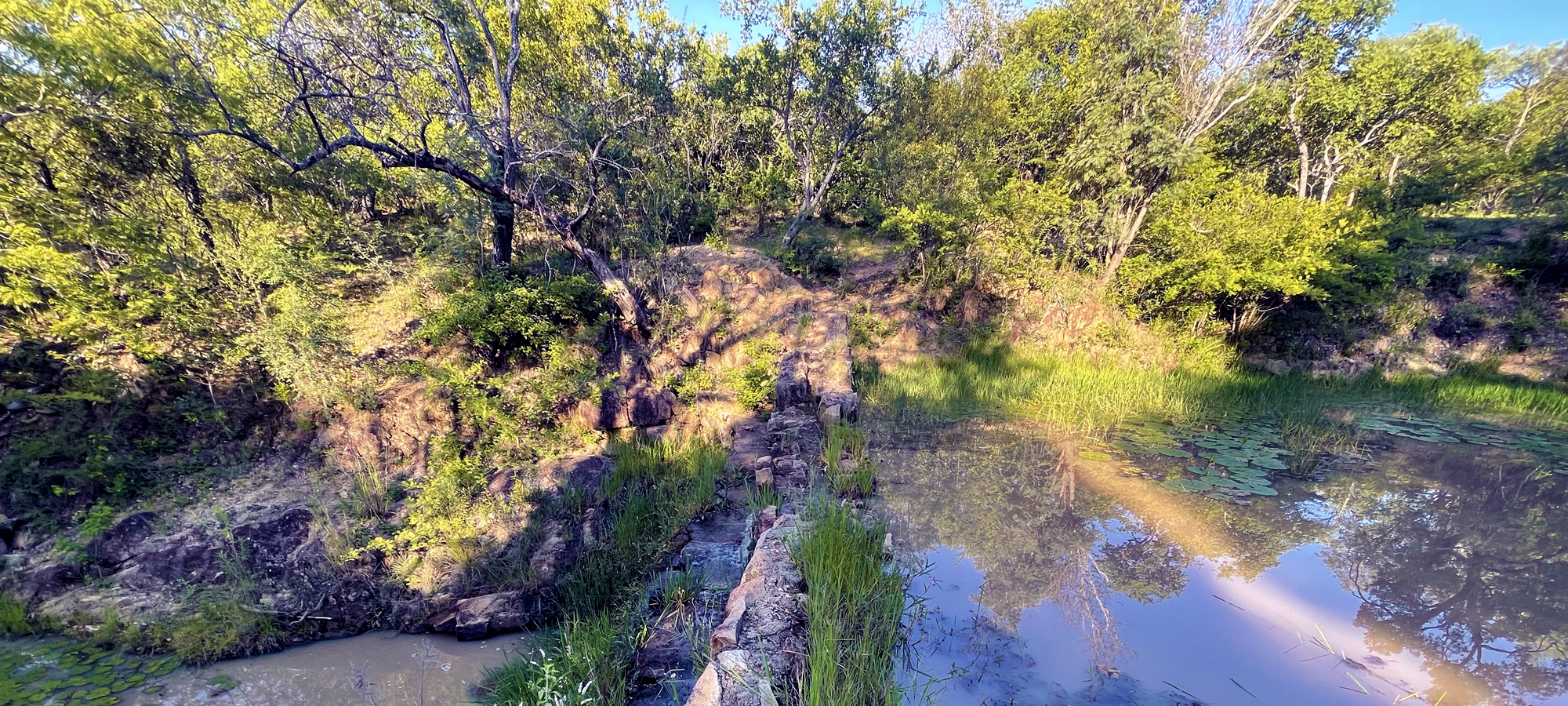
Digging into climate adaptation research through LINCZ
Written by Kara LeBlanc
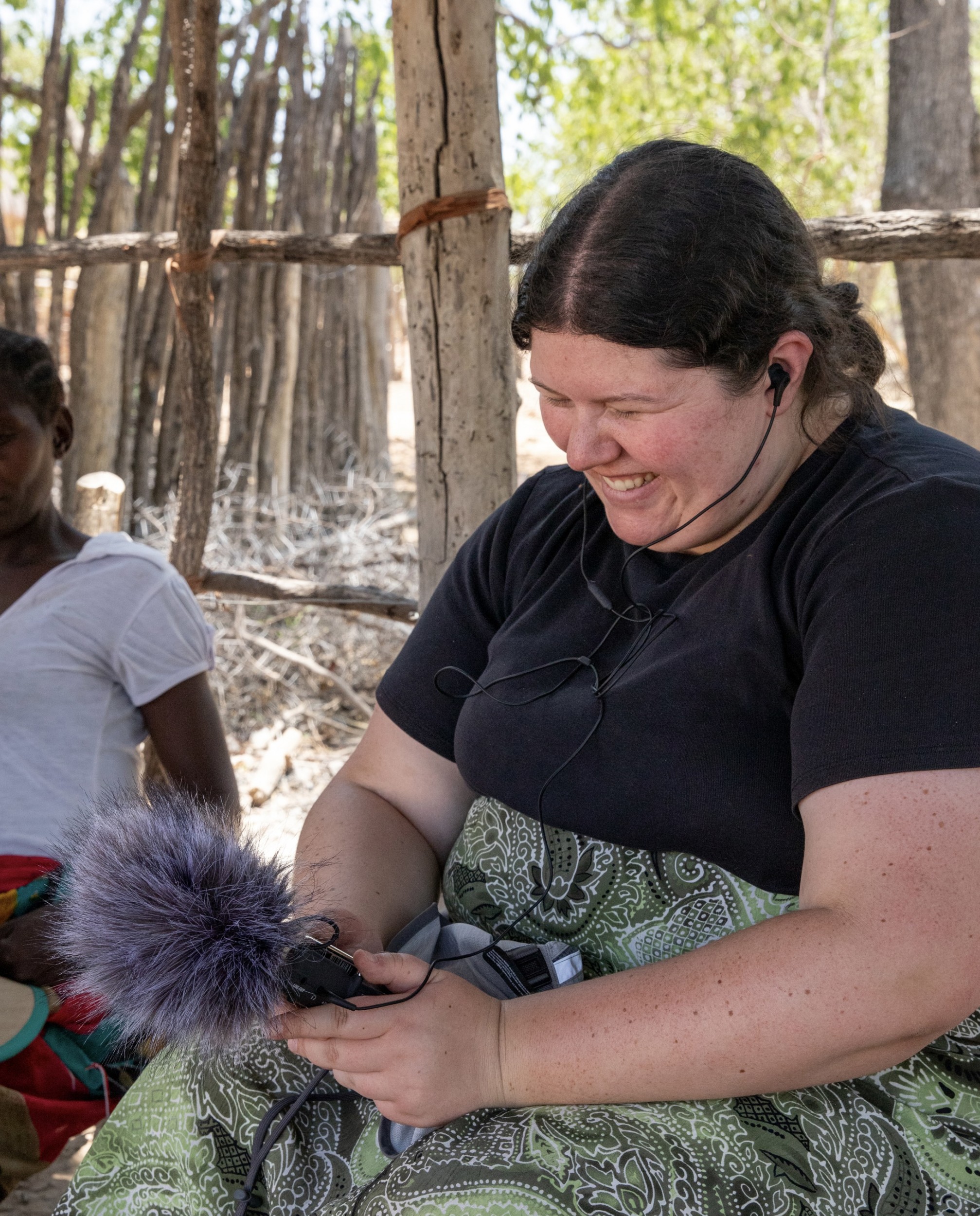 Kara LeBlanc while visiting farmers in the Binga District. Photo by Annalee Giesbrecht (MCC Canada).
Over the past year I have been creating a podcast series to share the research being carried out by faculty at Canadian Mennonite University (CMU) as part of the LINCZ project. Before sharing what I learned with listeners, I first had to understand the work myself. I recently graduated from CMU where I studied communications and media. Although my courses were diverse and covered many areas, the discovery that fields like psychology or peacebuilding relate deeply to climate change didn't come until this year. Meeting with the seven CMU faculty researchers gave me an understanding of their roles in the LINCZ project and what their research looks like in practice.
In many ways, the process of creating this podcast gave me a crash course on the impacts of climate change from many different perspectives. I have learned how government policies can impact climate adaptation without even naming climate change directly. I heard about how satellite images can give us detailed information about the earth's surface, and how this knowledge can guide field work and restoration efforts.
I have learned that biological research can help monitor the impacts of climate adaptation efforts over time, and how community relationship dynamics can be deeply influenced by climate change. In each podcast episode we will really be "digging in," and hearing from researchers, project participants, and colleagues from partner organizations on how climate change affects many aspects of a person's life.
We will confront some difficult realities, but we will also learn about the good work being done through LINCZ and how these project activities are helping to strengthen adaptation efforts on the ground in Zimbabwe.
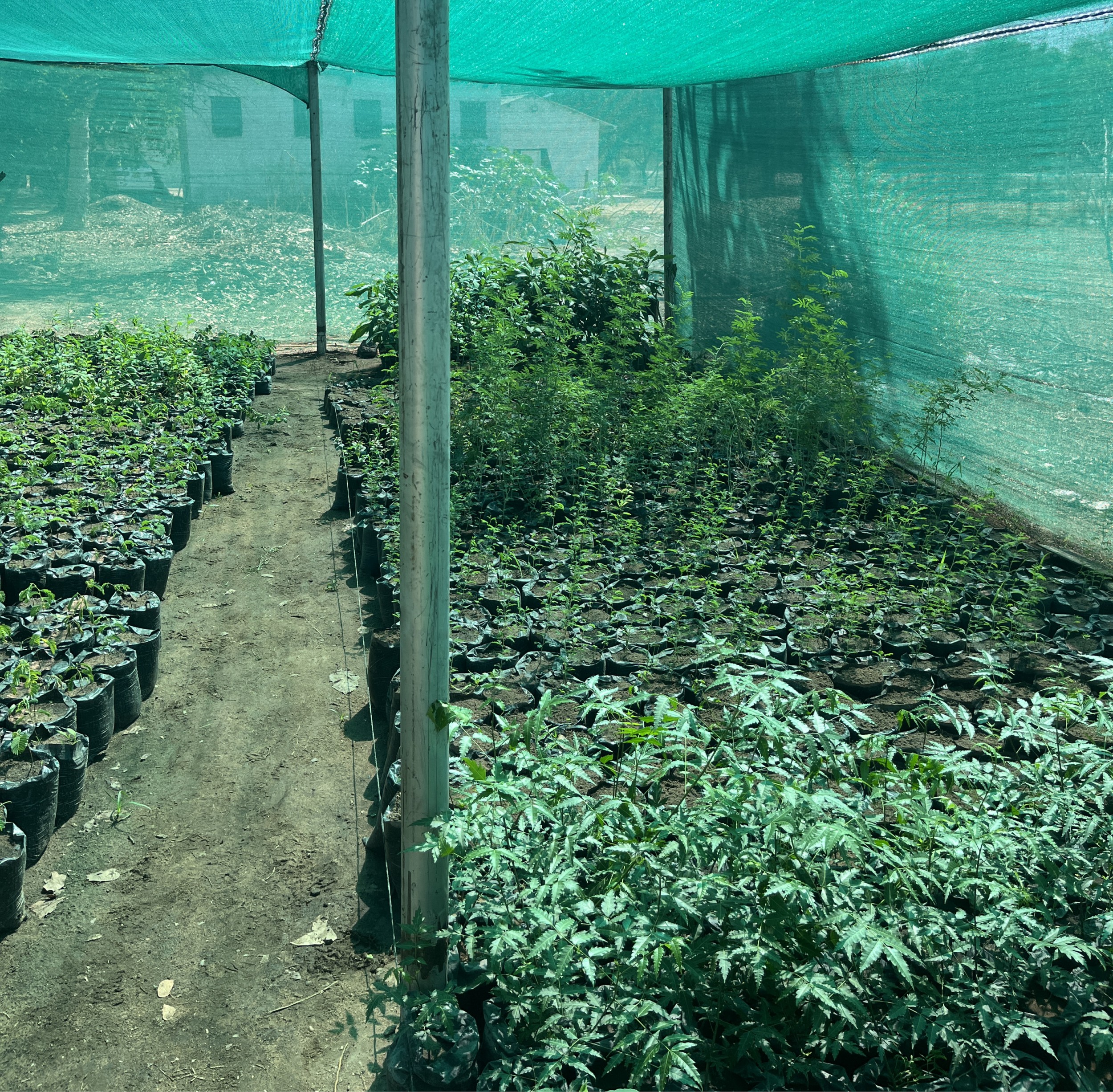 The tree nursery at Kulima Mbobumi Training Centre (KMTC). Photo by Kara LeBlanc.
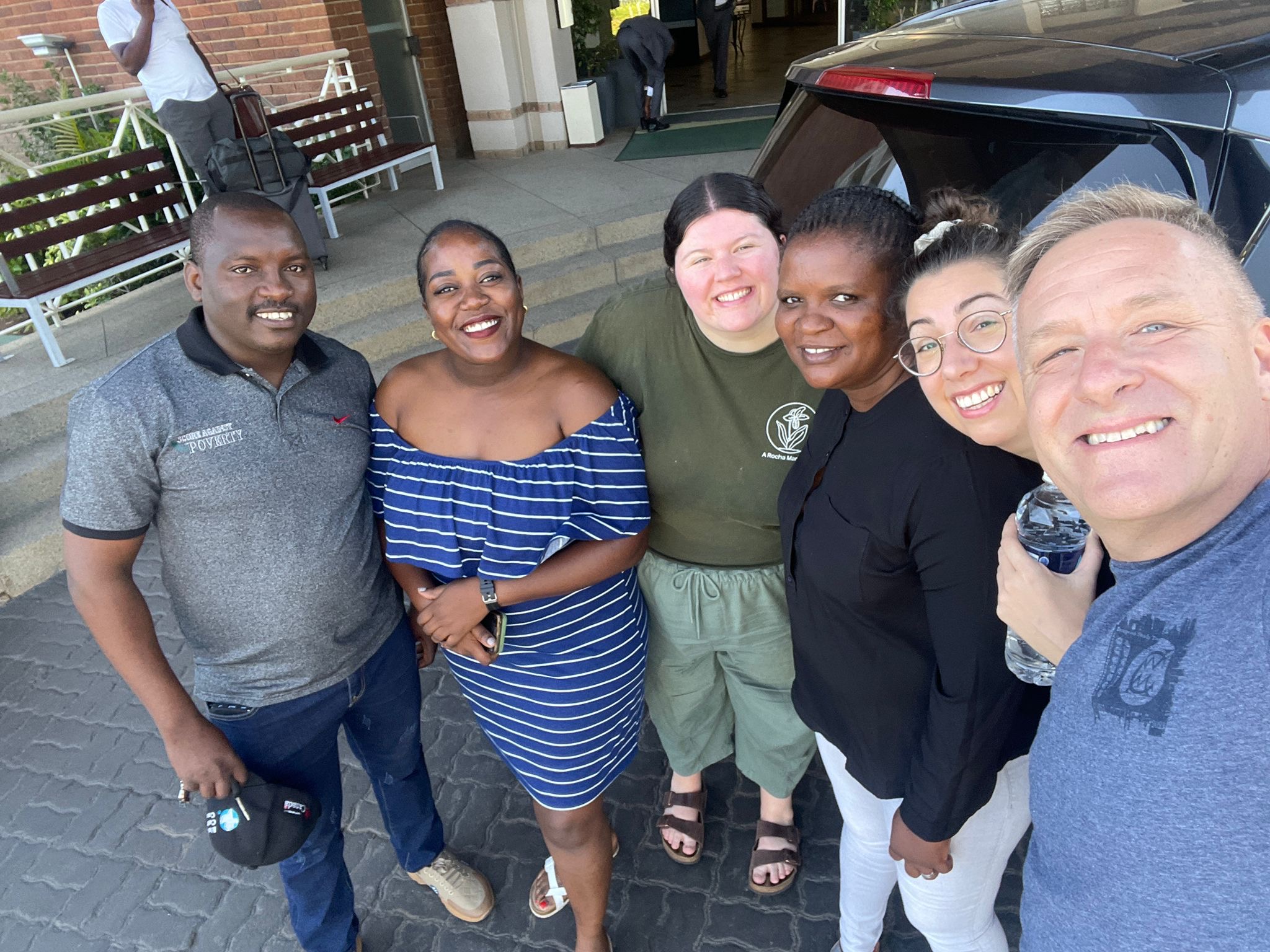
In December 2024, I left a freshly snow-covered Winnipeg to travel to Zimbabwe with CMU's LINCZ communication team. First, we visited the Gwanda district in southwestern Zimbabwe. Here we met with farmers to hear about their experiences experimenting with new agricultural methods.We also met with beekeepers to learn more about how apiculture helps with income generation without requiring additional water (an essential, yet labor-intensive resource to collect).
Next, we travelled north to the Binga district, where we met with couples to hear about how gender inclusion training is transforming their relationships. We spoke with gender champions, people who are helping spread knowledge from the training and support couples in their communities.
We visited LINCZ's local implementation partner, Kulima Mbobumi Training Centre, where staff gave us a tour of their tree nursery. They showed us a variety of trees that would help provide shelter and income in surrounding communities and were preparing to help plant these around the district at an upcoming tree planting event.
I'm grateful to the people I met in Zimbabwe for sharing their experiences. Being welcomed into their homes and lives felt like receiving a gift, and I now have a responsibility to pass those stories on. My goal is to bring listeners into that same space and help them "meet" the participants across the podcast episodes.
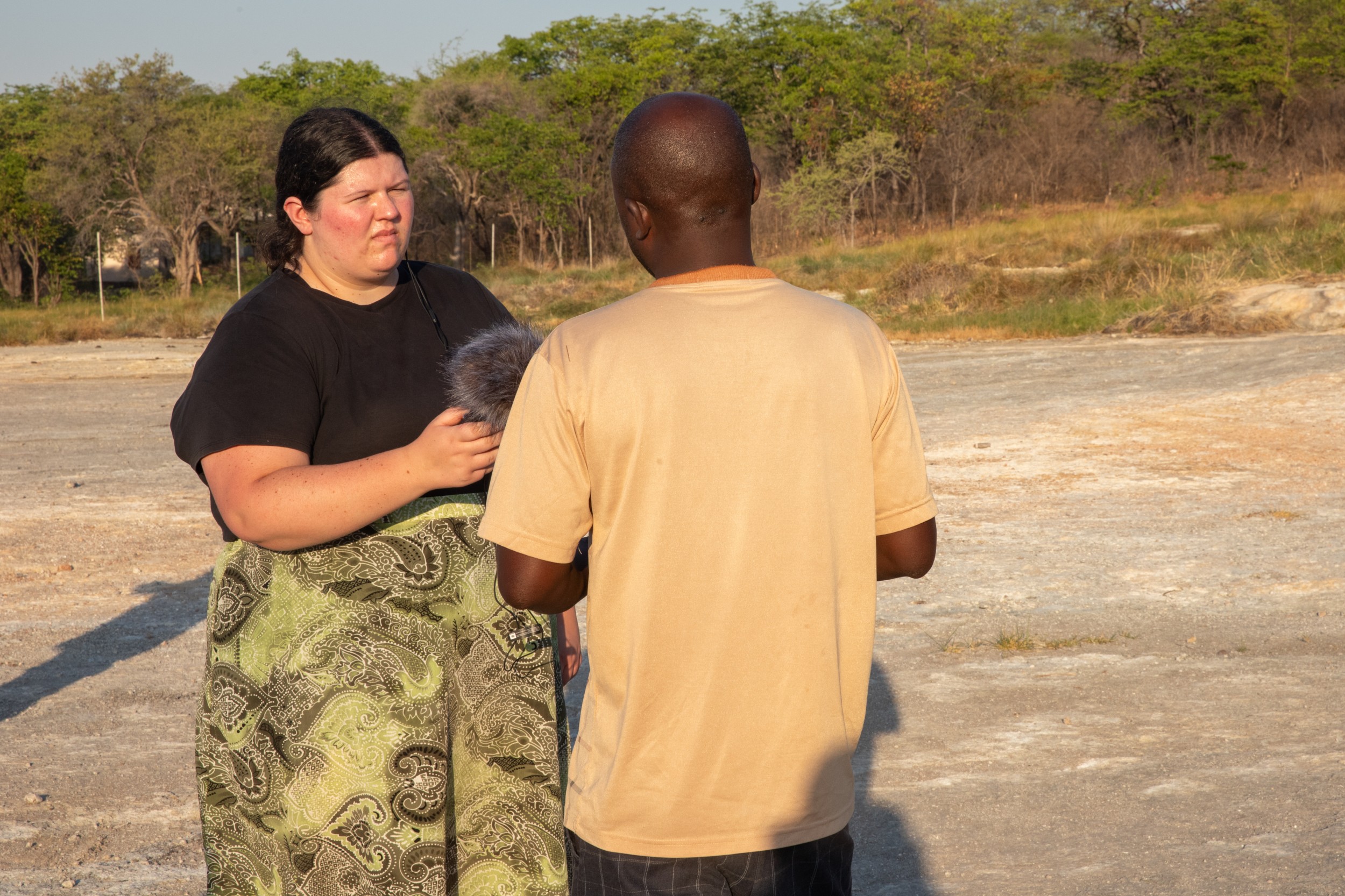 Kara interviewing Baido Ndlovu from KMTC at a hot spring in the Binga distrcit. Photo by Annalee Giesbrecht (MCC Canada).
Since returning to Winnipeg, I have spent a lot of time listening to the interviews and tracing the links between CMU's LINCZ research and participants' stories. It's been eye-opening to see how climate change research shapes people's lives by supporting project activities—and how ongoing community adaptation efforts, in turn, continue to inform that research.
In this podcast series I'll share what I've learned, with conversations from CMU researchers and from LINCZ participants and partners from Zimbabwe. This is a series for everyone—my goal is to create a bridge of knowledge between our two countries for anyone interested in learning more about this unique project. I hope you'll join me on this exciting adventure as we "dig in" to the LINCZ research together through "Digging In: unearthing stories of climate adaptation," a LINCZ podcast series, coming soon! Click here to listen to the podcast teaser.
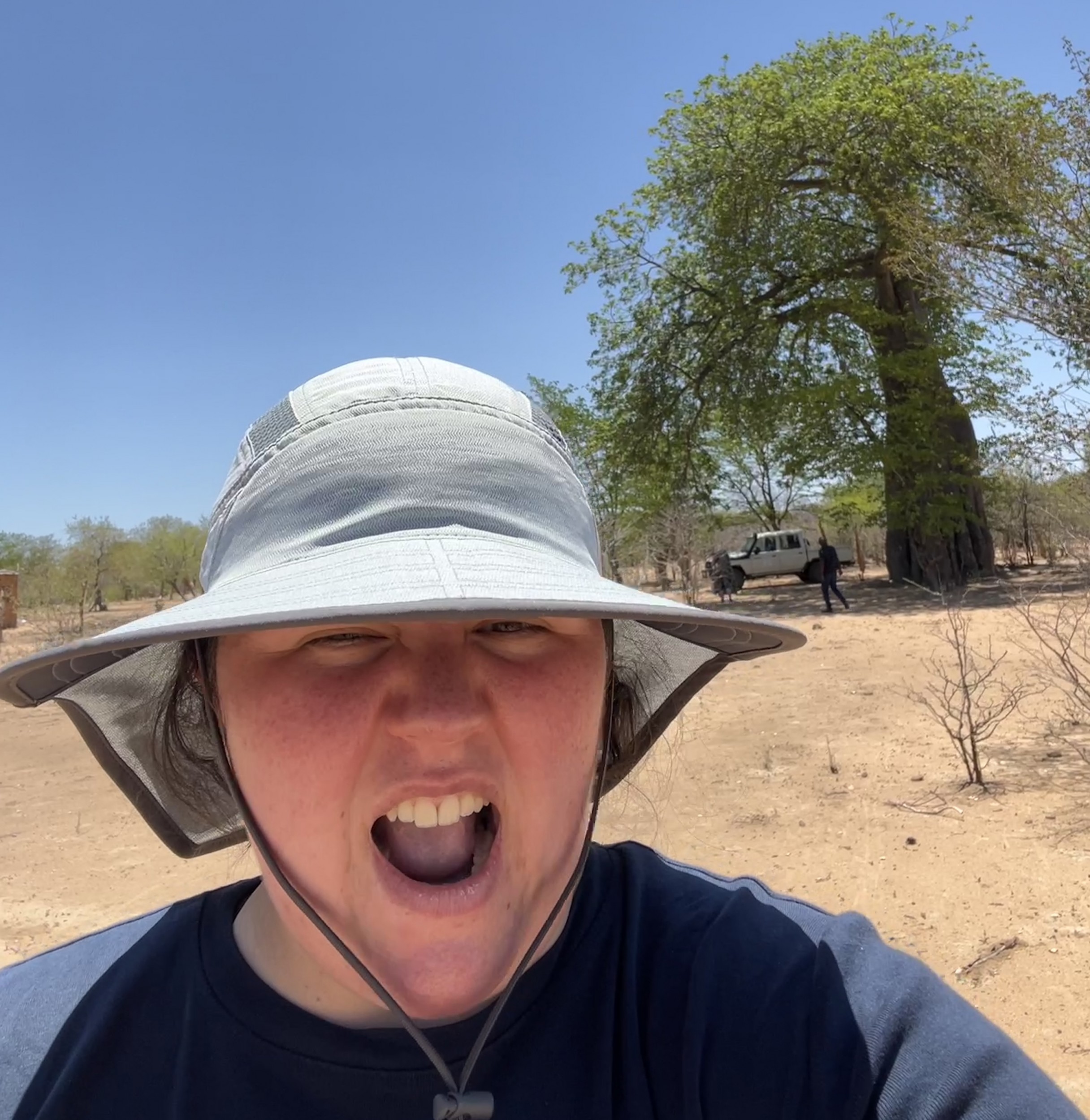 Kara in Binga district.
Kara LeBlanc is a recent graduate of Canadian Mennonite University where she studied communications and media.
During her final year of studies, Kara joined LINCZ as her practicum placement. She puts her passion for storytelling into action while creating a podcast series about the CMU research portion of the LINCZ project.
 Print This Blog Post