

Saving time whilst saving the environment!
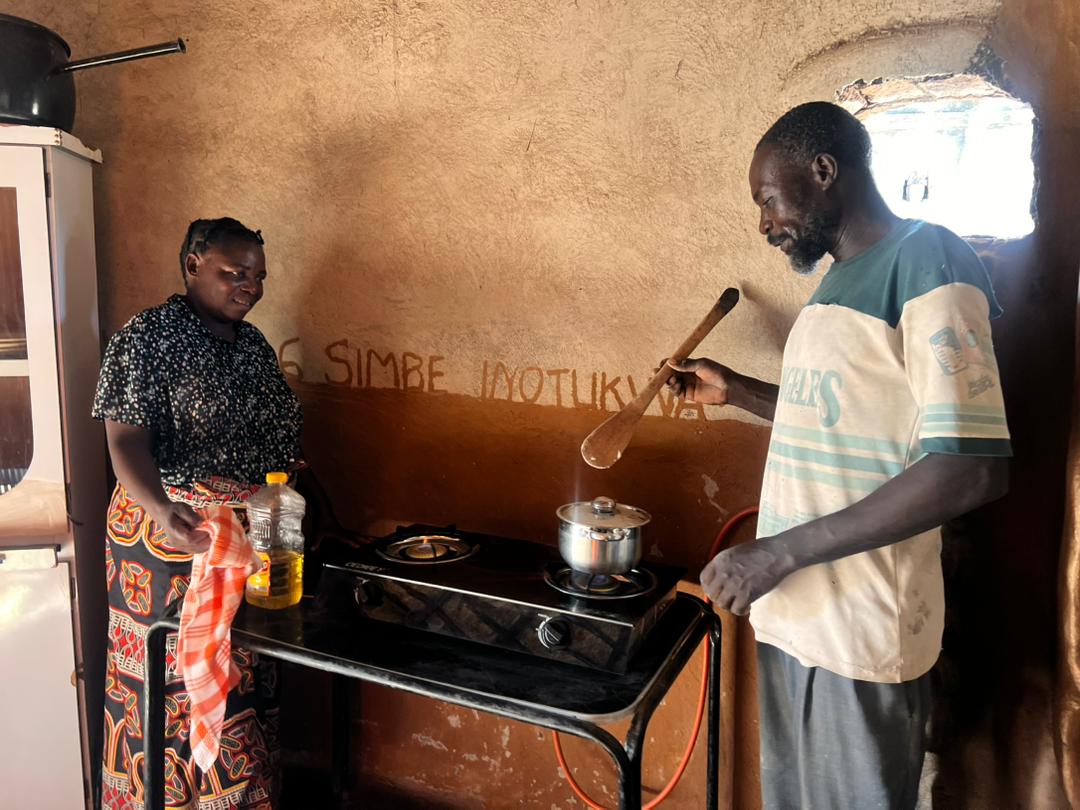
In rural Zimababwe, many households rely on firewood for cooking and income generation. In drought-prone districts such as Mwenezi, this dependence places increasing pressure on already fragile natural resources, contributing to ongoing forest degradation while making it more difficult for families, particularly women and girls, to meet their daily needs.
For Nyanisi Chikulo, 45, of Mbaimbai household in Chetemu Village in Mwenezi district, Zimbabwe, firewood has been her family's lifeblood throughout generations. Over the years, however, she has seen grazing lands and forests around her community gradually shrink as demand for firewood increased.
In rural Zimbabwe, most chores such as fetching water and firewood are confined to women and girls, leaving them vulnerable to abuse. Thus, the clean energy production technology contributes to reduced dependency on firewood, as well as saving the time that used to be spent by girls and women looking for firewood, reducing risks of abuse.
Nyanisi's household participated in clean energy interventions, as part of the LINCZ project, implemented by Score Against Poverty with the support of Mennonite Central Committee and Global Affairs Canada. Mbaimbai household was among the project households that received materials for constructing a biogas digester, including cement, mesh wires, valves and piping, while Nyanisi contributed locally available materials such as sand, stones and water.
In the biogas digester, water and fresh cow dung is broken down by microorganisms in absence of oxygen, producing methane-rich biogas that is used for cooking. The remaining slurry is nutrient rich, environmentally friendly organic fertilizer that the family uses in their garden and conservation agriculture, improving soil fertility while reducing reliance on chemical fertilizers. The 9-cubic-metre biogas digester provides enough fuel for Nyanisi's household to cook three meals a day and has the capacity to support a second household as well.
Rather than eliminating the use of firewood entirely, Score Against Poverty introduced clean energy alternatives that reduce household dependence on firewood. Introducing the biogas technology has helped families save time and lessen the burden traditionally placed on women and girls responsible for collecting fuel. By adopting biogas technology, Nyanisi's household has significantly reduced its dependence on firewood, saving an estimated 7- 10 hours per week previously spent collecting firewood and cooking over traditional open fires.
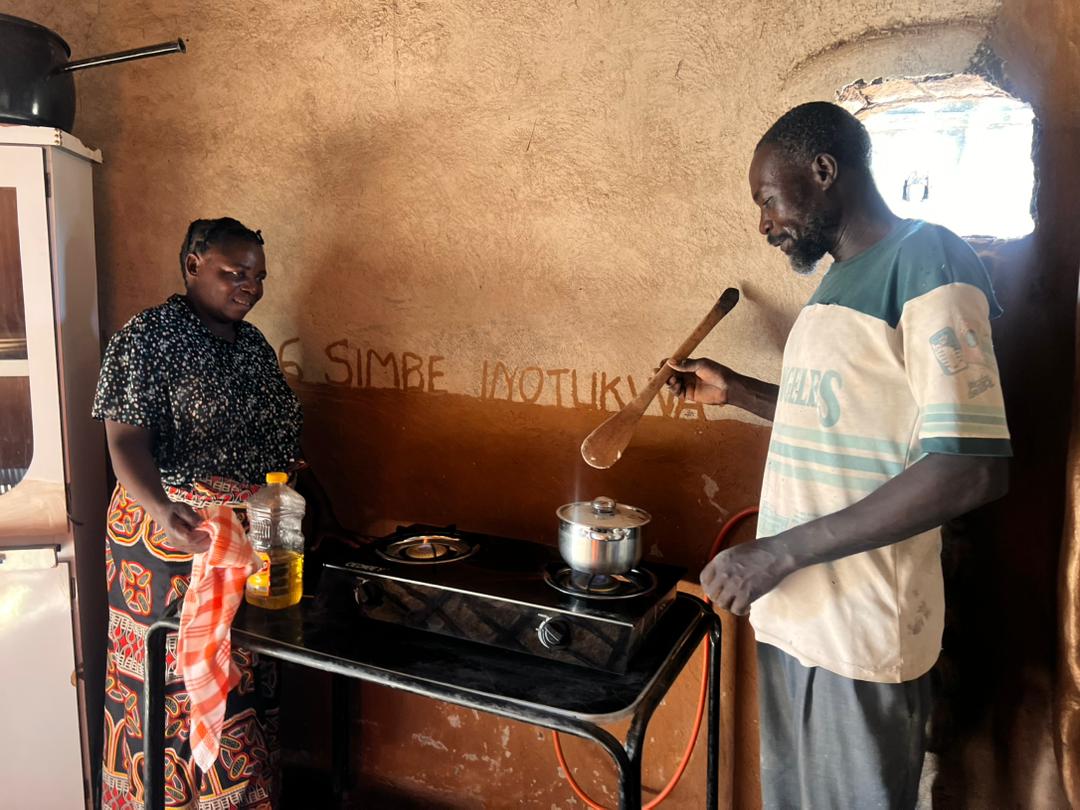
Nyanisi Chikulo (wife) and Armsong Mbaimbai (husband) cooking with gas from a biogas digester, Score Against Poverty 2025
"My grandchildren no longer have to fetch firewood before going to school, they simply boil water and cook their food on the stove and pack into their lunch boxes. They are so happy. This has also reduced conflicts in my home. As long as they use the biogas stove, they can finish their household chores and still have enough time for school," says Nyanisi, as she smiles freely.
Mrs. Mbaimbai says:
"SCORE taught us the importance of the biogas technology - that it will save us time while serving the environment. Now we exchange chores with my husband. Previously, we spent about 2 - 3 hours each day collecting firewood, but now we simply collect cow-dung from our kraal, which only takes a few minutes. This means that we save an estimated 2 hours per day - about 60 hours each month - allowing us to dedicate more time on farming and other productive activities. After CA+ training from SCORE, this year we are planning to plant ground nuts, round nuts, millet, sorghum, velvet beans and maize. All these take time but for cooking, we just go to our kraal for cow dung."
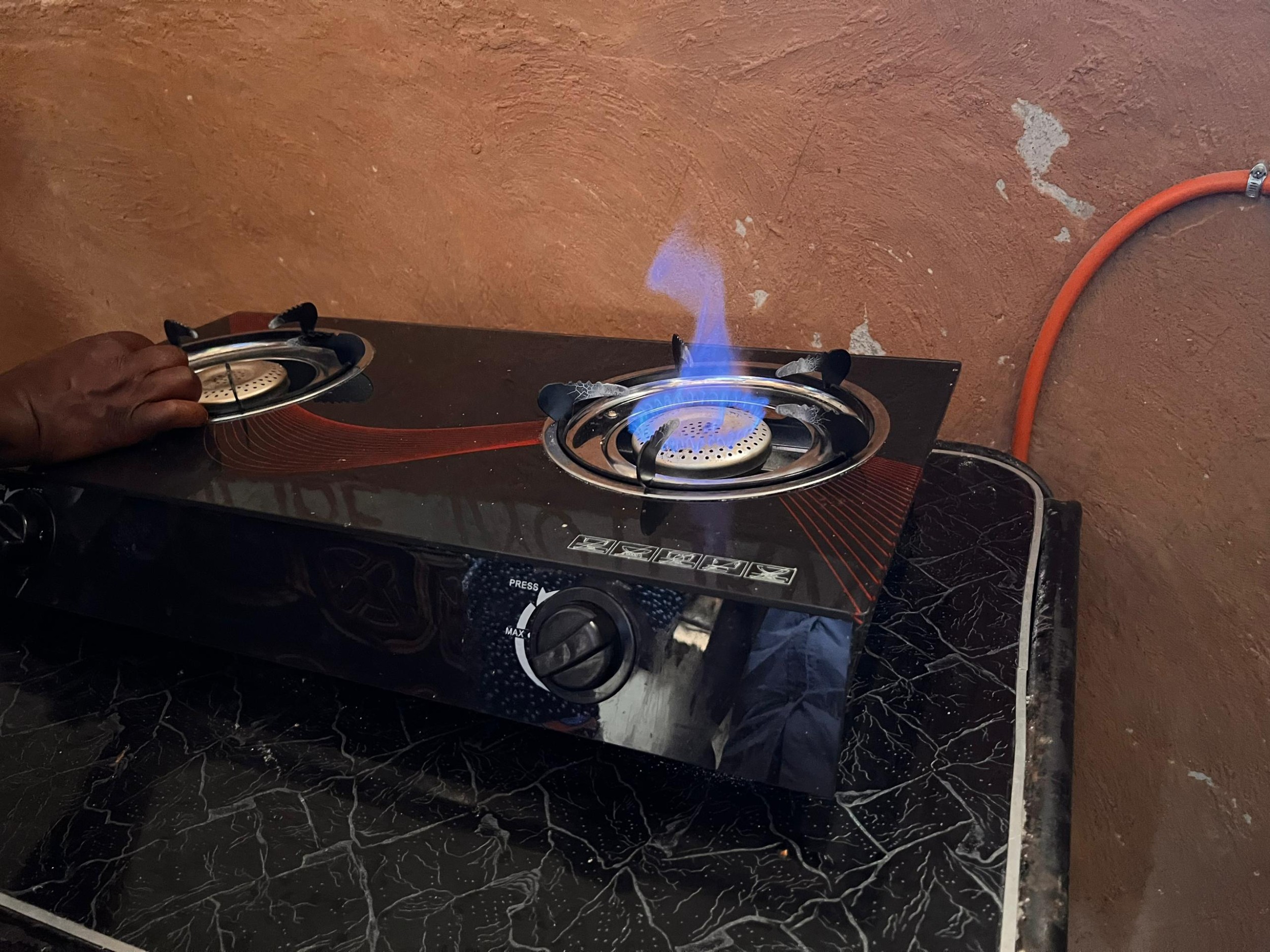
Photo courtesy of Score Against Poverty, 2025
The benefits have extended beyond clean cooking. Through Score Against Poverty's Gully Reclamation Cash-for-Work Program, Nyanisi has also earned additional income while helping restore severely eroded land in her community. The program supports both environmental rehabilitation and household resilience, enabling participants to invest in assets and strengthen their livelihoods. Readers can learn more about these efforts in the related Hub article, "Healing the Land, Empowering Communities: How Gully Reclamation is Transforming Mwenezi."
Nyanisi says:
"SCORE has registered me into the gully cash for work program and through this, I have managed to buy goats, chickens, and kitchen utensils and even plates, pots, and pans which I now use since I have transitioned to gas and less firewood. We also continue to grow our cattle that I got, not only for the dung for gas, but also to help us pay school fees when we fail to sell the grain."
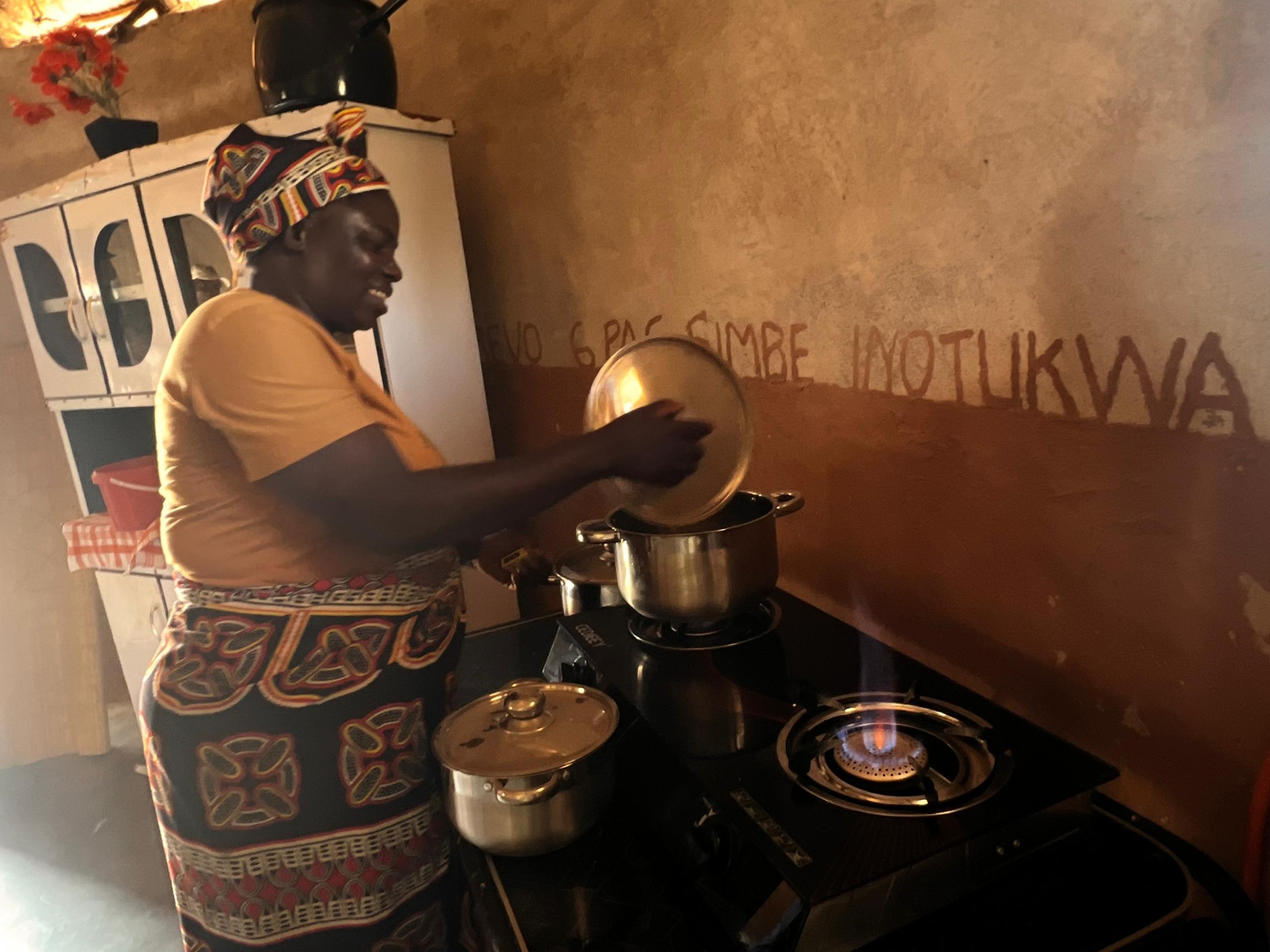
Nyanisi Chikulo using a gas stove fueled by the biogas digester, Score Against Poverty, 2025
About Score Against Poverty
Score Against Poverty (SCORE) is a local, community-based organization registered as a charity in 2020. However, it has been operating as a Trust since 2014. With over a decade of experience, SCORE has developed diverse capacities in areas such as education, food security, climate change, water, sanitation, and hygiene (WASH), humanitarian assistance, clean energy, and gender equality. SCORE focuses on addressing the needs of the most vulnerable groups in the community, including women, men, girls, boys, and people living with disabilities. SCORE is implementing the LINCZ project in Mwenezi District.
 Print This Blog Post